 Albania
 Algeria
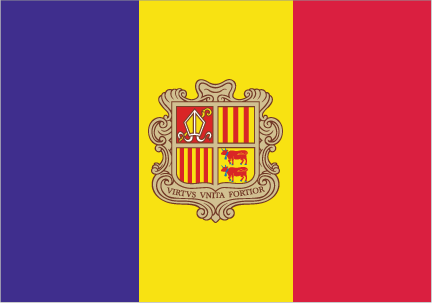 Andorra
 Argentina
 Armenia
 Australia
 Austria
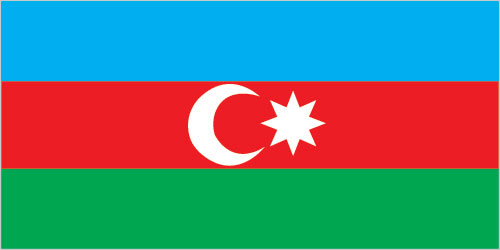 Azerbaijan
 Bahrain
 Belgium
 Bolivia
 Brazil
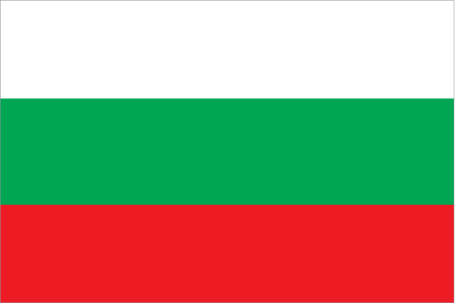 Bulgaria
 Cambodia
 Cameroon
 Canada
 Chad
Chad Chile
Chile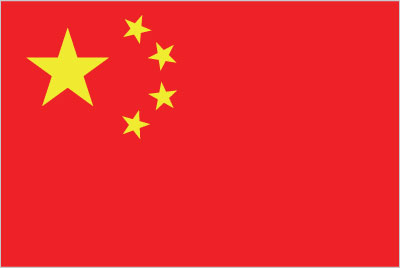 China
China Colombia
 Costa Rica
 Croatia
 Cyprus
 Czechia
 Denmark
 Ecuador
 Egypt
Egypt Finland
 France
 Georgia
 Germany
 Ghana
Ghana Greece
 Hungary
 Iceland
 India
India Indonesia
 Ireland
 Italy
Italy Jamaica
 Japan
Japan Jordan
 Kazakhstan
 Kenya
Kenya Kuwait
 Latvia
 Lebanon
 Libya
Libya Lithuania
 Luxembourg
 Malaysia
 Maldives
 Mali
Mali Malta
Malta Mexico
 Moldova
 Monaco
 Morocco
 Netherlands
 New Zealand
 Nigeria
 North Macedonia
 Norway
 Oman
OmanThe Food and Agriculture Organization of the United Nations trains Libyan cadres on communication and data collection about sustainable development goals
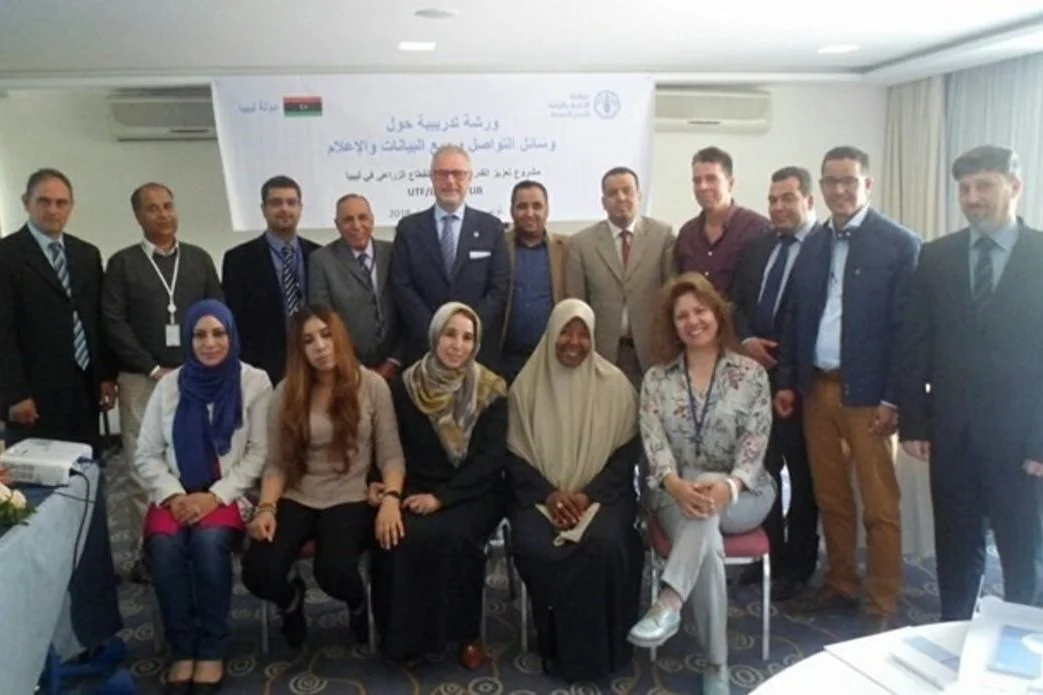
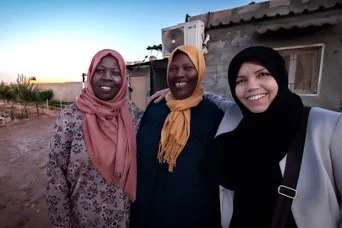
The Food and Agriculture Organization of the United Nations (FAO) concluded a ten-day training program for a number of staff members in the Ministry of Agriculture, Animal and Marine Wealth in Libya. The objective of the diverse training program, which took place in Tunisia from 9 to 19 April, was to equip the participants with the skills they need in their work, especially in the fields of communication, media, and statistical data collection, within the project agreed upon by the organization and the ministry to enhance national capacities in the agricultural sector in Libya.
The training workshop was inaugurated by Mr. Michael George El-Hajj, the coordinator of the Food and Agriculture Organization of the United Nations in North Africa, affirming the organization’s readiness to contribute to enhancing national capacities in the agricultural sector to achieve the sustainable development goals of the United Nations.
The training program focused on two main axes: communication, and statistics and data collection.
In addition to the theoretical aspect, these courses were characterized by the practical aspect, allowing trainees to use the programs and applications adopted by FAO in the field of statistics and data collection, enabling them to perform their work with a high level of professionalism.
This training workshop is part of an ambitious plan to enhance Libyan national capacities in the agricultural sector, to be followed by a series of training courses over two years in areas such as capacity assessment, training plan development and design, trainee evaluation, training in planning and restructuring the agricultural sector, training in planning veterinary services development and management, training in developing plans and strategies to enforce fisheries law, as well as in the areas of plant production, water, plant protection, integrated pest management, land mapping, remote sensing, guidance, marketing, agricultural policy development, monitoring, analysis, evaluation, and many other areas relevant to the agriculture and food sector.