 Albania
 Algeria
 Andorra
 Argentina
 Armenia
 Australia
 Austria
 Azerbaijan
 Bahrain
 Belgium
 Bolivia
 Brazil
 Bulgaria
 Cambodia
 Cameroon
 Canada
 Chad
Chad Chile
Chile China
China Colombia
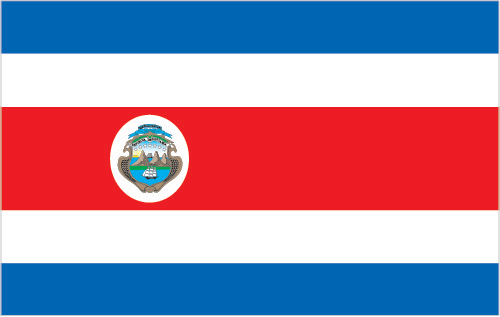 Costa Rica
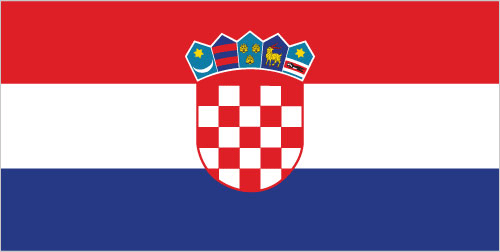 Croatia
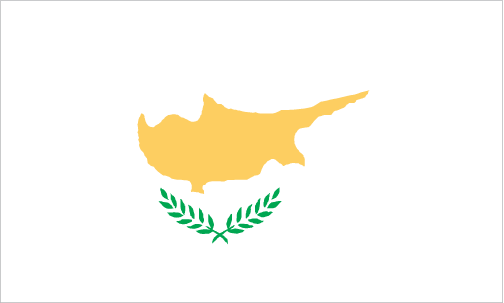 Cyprus
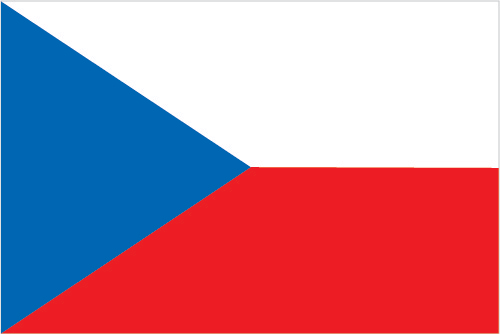 Czechia
 Denmark
 Ecuador
 Egypt
Egypt Finland
 France
 Georgia
 Germany
 Ghana
Ghana Greece
 Hungary
 Iceland
 India
India Indonesia
 Ireland
 Italy
Italy Jamaica
 Japan
Japan Jordan
 Kazakhstan
 Kenya
Kenya Kuwait
 Latvia
 Lebanon
 Libya
Libya Lithuania
 Luxembourg
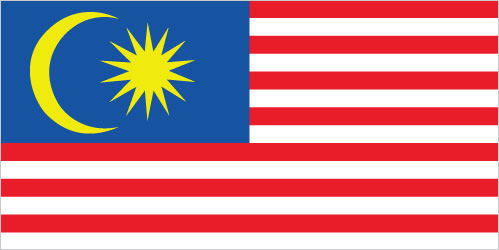 Malaysia
 Maldives
 Mali
Mali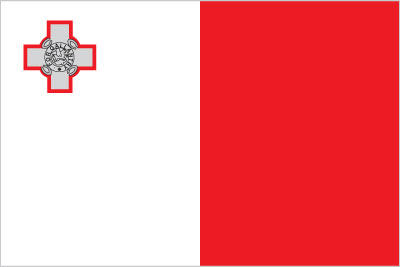 Malta
Malta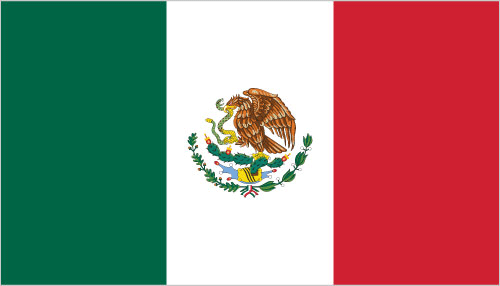 Mexico
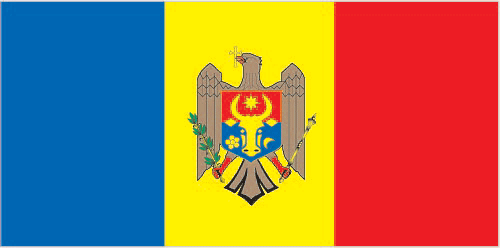 Moldova
 Monaco
 Morocco
 Netherlands
 New Zealand
 Nigeria
 North Macedonia
 Norway
 Oman
OmanSustainable Forest Management

Close to 50 percent of the rainforest in Cameroon has been subjected to forest exploitation in the last 3 decades. As the country seeks to further develop sustainably, there is an urgent need to protect and effectively manage the remaining areas of rich forests (TRIDOM & Ngoyla Mintom forest blocks, for example) to maintain their integrity.
WWF Cameroon’s efforts in sustainable forest management in Cameroon aim to look beyond protected areas (PAs) and ensure that the impacts of activities at its peripheral zones do not affect the parks and the overall forest ecosystem of the region.
Our strategy consists of mainstreaming sustainable forest management standards in all priority landscapes through three key interventions, namely Voluntary Partnership Agreement/Forestry Law Enforcement, Governance and Trade (VPA/FLEGT), Best Management Practices and Certification, and REDD/Climate Change.
The VPA/FLEGT initiative focuses on non-permanent forest domain and aims to reduce illegal artisanal logging. Best Management Practices and Certification and REDD/Climate Change are implemented in the permanent forest domain as well as in the non-permanent forest areas, with limitation to community forests in the non-permanent domain. In order to reduce unsustainable logging, the objective is to increase the forest area under certification and/or under best forest management practices.