 Albania
 Algeria
 Andorra
 Argentina
 Armenia
 Australia
 Austria
 Azerbaijan
 Bahrain
 Belgium
 Bolivia
 Brazil
 Bulgaria
 Cambodia
 Cameroon
 Canada
 Chad
Chad Chile
Chile China
China Colombia
 Costa Rica
 Croatia
 Cyprus
 Czechia
 Denmark
 Ecuador
 Egypt
Egypt Finland
 France
 Georgia
 Germany
 Ghana
Ghana Greece
 Hungary
 Iceland
 India
India Indonesia
 Ireland
 Italy
Italy Jamaica
 Japan
Japan Jordan
 Kazakhstan
 Kenya
Kenya Kuwait
 Latvia
 Lebanon
 Libya
Libya Lithuania
 Luxembourg
 Malaysia
 Maldives
 Mali
Mali Malta
Malta Mexico
 Moldova
 Monaco
 Morocco
 Netherlands
 New Zealand
 Nigeria
 North Macedonia
 Norway
 Oman
OmanSustainable Charcoal Production Using Energy Efficient Kilns
Sustainable Charcoal Production in Kenya
Charcoal production is a significant industry in Kenya, serving as the main energy source for many households. Over 82 percent of urban and 34 percent of rural households rely on charcoal, employing over 700,000 people along the value chain. Despite its importance, the sector remains largely informal and unregulated, contributing significantly to deforestation due to unsustainable wood production practices.
Challenges in the Charcoal Sector
- Informality and Lack of Regulation: The charcoal sector lacks clear policies and regulations, leading to unsustainable practices and environmental degradation.
- Deforestation: Unsustainable production methods are a major contributor to deforestation, as producers do not prioritize sustainable wood sourcing.
UNDP and Local Partnerships for Sustainable Solutions
To address these challenges, the UNDP, in collaboration with the Kenya Forest Service (KFS) and Kenya Forest Research Institute (KEFRI), is implementing training programs in Taita Taveta and Kwale Counties. These programs focus on introducing sustainable technologies and practices to charcoal producers.
Key Training Components
- Sustainable Tree Utilization: Training on natural regeneration techniques to ensure a continuous supply of wood without depleting forest resources.
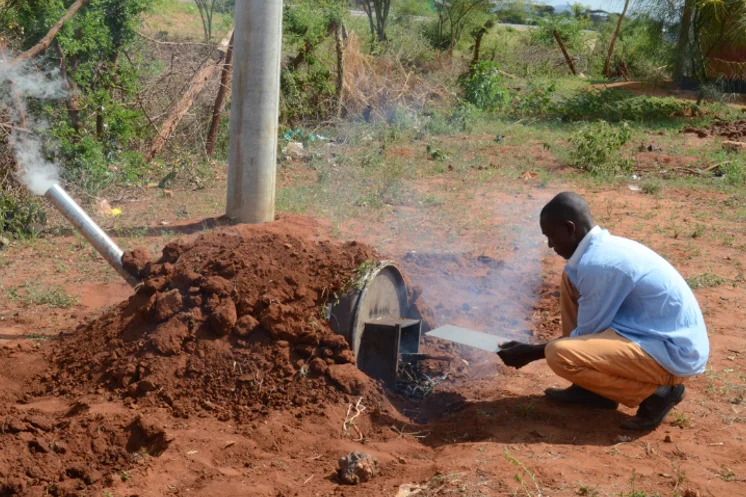
- Efficient Wood Conversion Technologies: Introduction of metal kilns, such as vertical and horizontal drum kilns, which are more efficient than traditional earth kilns.
- Regulatory Awareness: Educating producers on the charcoal act and laws governing the sector to ensure compliance and sustainable practices.
- Value Addition and Marketing: Training on branding and marketing charcoal to add value and increase producer benefits.
- Reforestation and Conservation Plans: Encouraging reforestation efforts to offset the environmental impact of charcoal production.
Innovative Technologies
- Vertical Drum Kiln: Made from ordinary oil drums, these kilns are modified with a chimney and can carbonize wood in about 8 hours, significantly faster than earth kilns which take 2 to 3 days. The recovery rate of charcoal is also higher.
- Horizontal Drum Kiln: Similar to the vertical drum kiln, this version places wood horizontally and is slightly covered with earth. It features a removable lid and a metal grill for air circulation during carbonization.
- Portable Metal Kiln: Larger kilns that can produce up to 5 bags of charcoal within 6 to 8 hours. They operate on a reverse draught principle, carbonizing wood from the top down and producing tar as a byproduct, which can be used for various purposes such as shoe polish.
Impact and Producer Feedback
Producers have shown enthusiasm for the new technologies. Martha Wambona, a local charcoal producer, expressed her intention to adopt the vertical drum kiln due to its efficiency and the high quality of the charcoal produced. The training and introduction of these technologies aim to make charcoal production more sustainable and beneficial for the producers.
By streamlining the industry and promoting sustainable practices, these initiatives aim to reduce deforestation, improve the livelihoods of charcoal producers, and ensure the long-term viability of the charcoal sector in Kenya.