 Albania
 Algeria
 Andorra
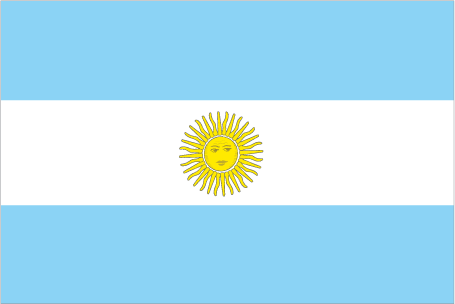 Argentina
 Armenia
 Australia
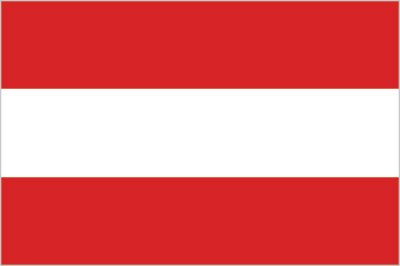 Austria
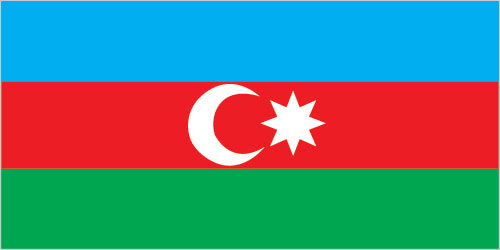 Azerbaijan
 Bahrain
 Belgium
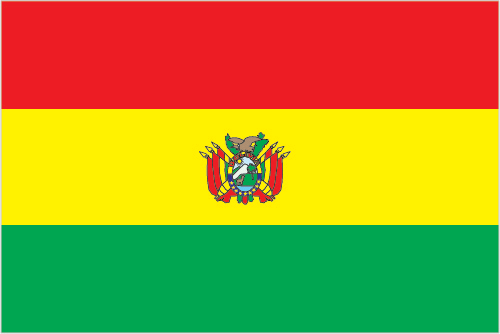 Bolivia
 Brazil
 Bulgaria
 Cambodia
 Cameroon
 Canada
 Chad
Chad Chile
Chile China
China Colombia
 Costa Rica
 Croatia
 Cyprus
 Czechia
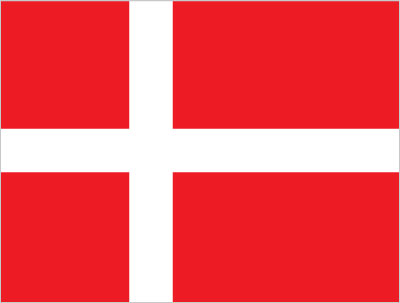 Denmark
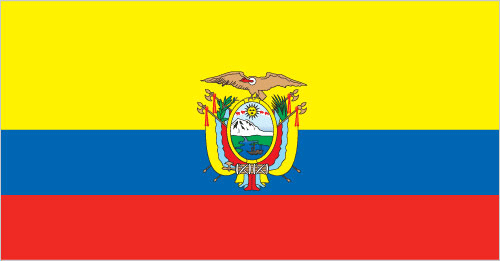 Ecuador
 Egypt
Egypt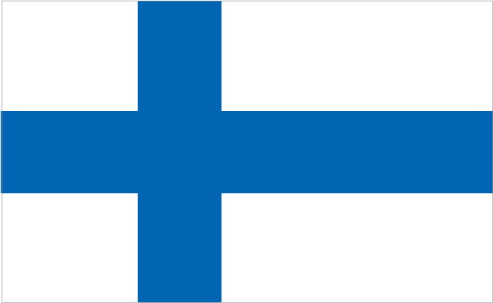 Finland
 France
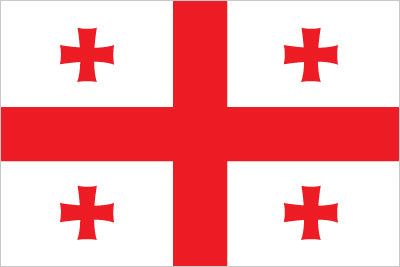 Georgia
 Germany
 Ghana
Ghana Greece
 Hungary
 Iceland
 India
India Indonesia
 Ireland
 Italy
Italy Jamaica
 Japan
Japan Jordan
 Kazakhstan
 Kenya
Kenya Kuwait
 Latvia
 Lebanon
 Libya
Libya Lithuania
 Luxembourg
 Malaysia
 Maldives
 Mali
Mali Malta
Malta Mexico
 Moldova
 Monaco
 Morocco
 Netherlands
 New Zealand
 Nigeria
 North Macedonia
 Norway
 Oman
OmanEnabling Environment for Sustainable Enterprises in Moldova
What Has Been Done:
The ILO assisted the National Confederation of Employers of the Republic of Moldova (CNPM) in conducting an EESE assessment. Consultations between the government and employers on the assessment results led to reforms, including simplifying registration and licensing procedures, reducing the number of state inspections and control bodies, improving tax policies and administration, approving a new law on public procurement, making labor law more flexible, and developing the legislative framework for dual training and apprenticeship.
As a follow-up, the ILO was requested to support a new tripartite assessment of the enabling environment and identify priority areas for further reforms. This new assessment is based on a desk review of recent findings on the business environment in Moldova, interviews with government officials, employers, and trade unions, and a perception survey among business owners and workers.
The Survey and Its Sample:
The updated assessment was launched, and the survey sample consisted of 400 business owners and 107 workers. Survey respondents were spread across Moldova, with the majority located in Chisinau Municipality (61%). The sample focused on the manufacturing industry (37.5% of respondents) and services (23.3%). Regarding the size of the studied enterprises, most were micro (9 employees or less, 64.5% of respondents) or small (10 to 49 employees, 25.5% of respondents).
Results:
Good governance, social dialogue, and education, training, and lifelong learning emerged as three key areas of concern. In particular, bribery and corruption were identified as major issues by 87.3% of respondents. Additionally, the majority of those surveyed identified the need for greater access to training, better education, and more support for business development in Moldova. Social dialogue also emerged as a key concern, with 40% of enterprise respondents stating that they believed social dialogue was either inefficient or entirely ineffective at national, sectoral, and territorial levels.
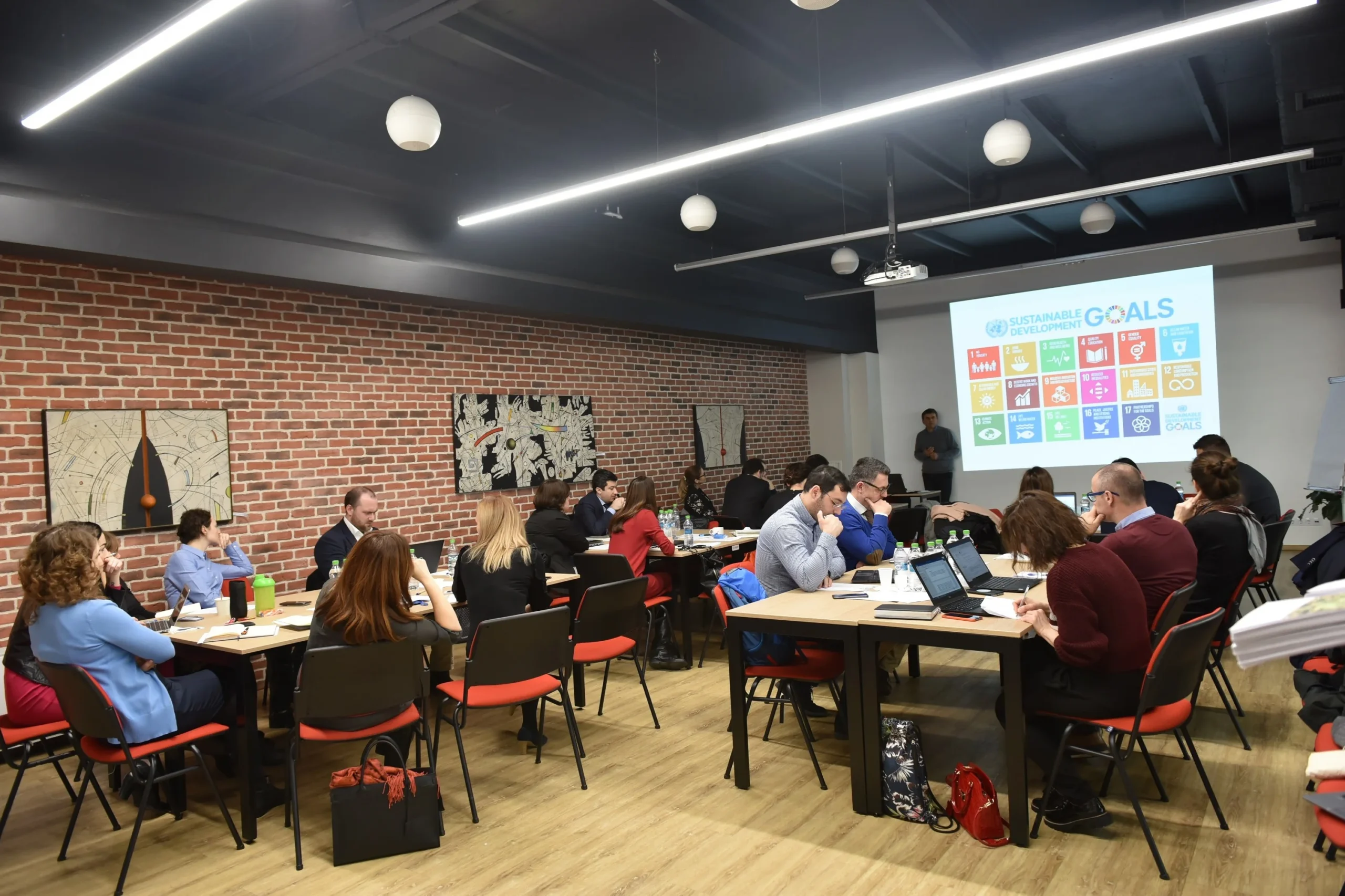
The findings of the EESE assessment were disseminated to representatives from the government and social partners and validated during a workshop in September 2019. At this workshop, tripartite participants agreed on priority areas for action and developed an action plan focused on (i) the enabling legal and regulatory environment, (ii) education, training, and lifelong learning, and (iii) social dialogue, to create a more enabling environment for sustainable enterprise development in Moldova.